Signed in as:
filler@godaddy.com
Signed in as:
filler@godaddy.com

Tucked away on the Gulf Coast, Indian Bluff Island is one of Palm Harbor’s most unique coastal treasures. Connected to the mainland by a scenic causeway, this golf-cart-friendly neighborhood feels like a private sanctuary while still being just minutes from everything the Tampa Bay area has to offer. It is an incredibly tight-knit, family-friendly community where neighbors genuinely know each other, kids ride their bikes down the quiet streets, and locals gather for community events and cleanups. Surrounded by open water, the island offers stunning sunset views, easy water access for boating and kayaking, and a peaceful, laid-back atmosphere that makes it a truly special place to call home.
We're here to help every resident, whether you're considering moving here or have lived here for years. Let us know what you need, and we'll make sure that your question reaches the right person to receive a prompt response.
info.indianbluffisland.com@gmail.com

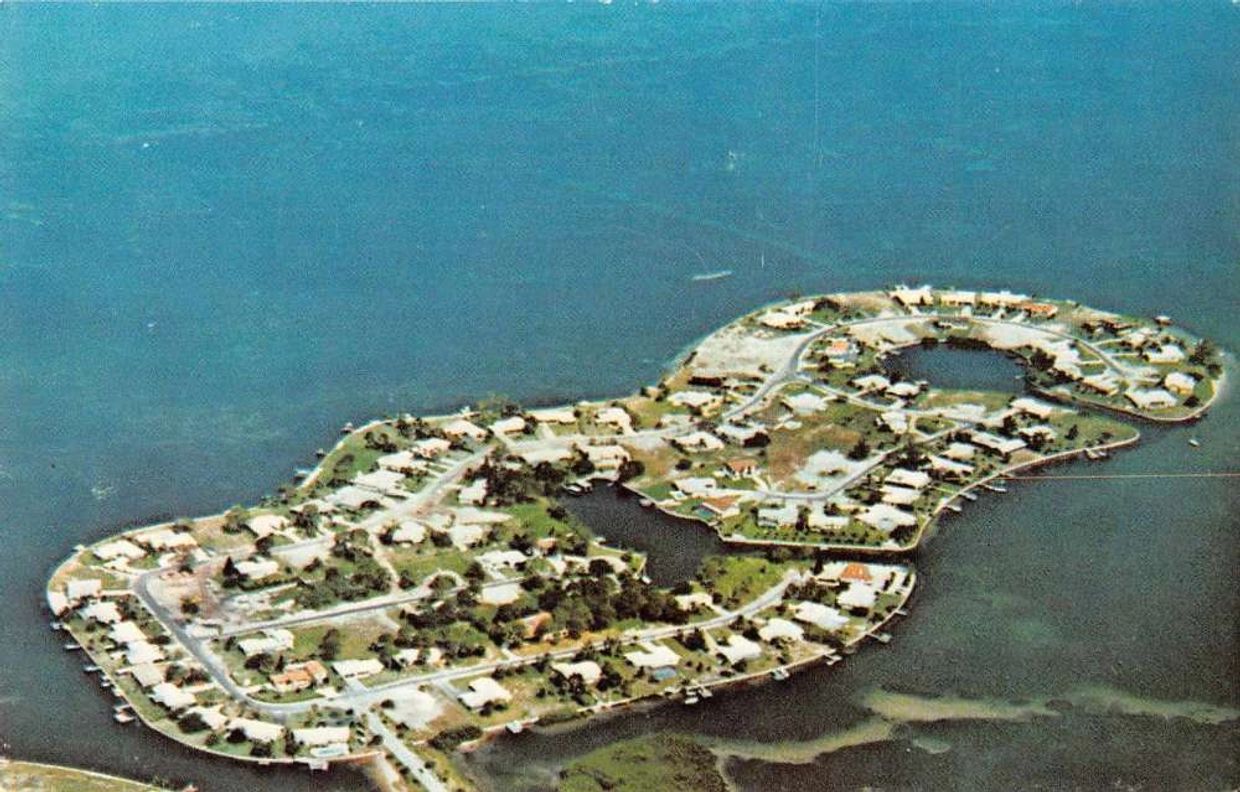
Situated along the eastern shore of St. Joseph Sound in Palm Harbor, Florida, Indian Bluff Island is a waterfront community with a history that mirrors the broader transformation of North Pinellas County over the past century. Encompassing roughly 22 acres of coastal high ground and marine wetlands, the island evolved from an isolated barrier hammock into a residential neighborhood.
Long before modern settlement, the coastal waters of St. Joseph Sound were frequented by indigenous populations, including the Tocobaga people. The natural elevation along the bluff provided a vantage point over the estuary, which served as a rich source of shellfish, mullet, and coastal game.
Following Florida’s statehood in 1845 and subsequent federal surveying efforts, the 22-acre island was recorded as sovereign federal property. In early local records, nautical charts, and land surveys, the landform was designated as Buchanan Island.
The defining legal transaction in the island’s modern history occurred in 1921. Robert E. Gause, a local pioneer, negotiated with the U.S. General Land Office to purchase the entire island from federal ownership.
For more than three decades following the Gause purchase, Buchanan Island remained a secluded wilderness retreat. With no bridge or causeway connecting it to the mainland, access was restricted to shallow-draft skiffs, small boats, or navigating marshy mudflats during low tide.
During this era, the adjacent mainland—encompassing Wall Springs and Sutherland (now Palm Harbor)—flourished as a hub for citrus agriculture, natural mineral spring tourism, and rail transport along the Orange Belt Railway. Early families used the island primarily for fishing camps, net-drying stations, and rustic coastal living.
Following World War II, Pinellas County experienced rapid population growth and suburban expansion. Developers recognized the unique value of Buchanan Island’s high bluff elevation and direct, open-water access to St. Joseph Sound and the Gulf of Mexico.
Local historical research brought renewed recognition to the island’s pioneer origins. Historian Tom Rose authored "Indian Bluff Island Was Buchanan Island: A Century of Wall Springs and Florida History" in coordination with the Palm Harbor Historical Society, permanently archiving the land patent records, pioneer family accounts, and early nautical maps.
Today, Indian Bluff Island stands as a secluded, active waterfront neighborhood along St. Joseph Sound, balancing its rich maritime history with modern community stewardship.
We use cookies to analyze website traffic and optimize your website experience. By accepting our use of cookies, your data will be aggregated with all other user data.